
Electric motors drive conveyor systems in manufacturing, logistics, packaging, food processing, and automation industries. The right motor selection ensures smooth material flow, stable torque, low energy consumption, and long service life. A wrong choice increases downtime, power loss, and maintenance cost.
This guide explains how to choose the right electric motor for conveyor systems, focusing on performance, efficiency, and industrial reliability.
Why Correct Motor Selection Is Critical
A conveyor motor operates continuously under load. Incorrect sizing or type selection causes:
- Overheating during long runs
- Uneven belt or chain movement
- High electricity consumption
- Premature bearing and gearbox failure
Correct motor selection delivers:
- Stable torque under varying load
- Smooth startup and stopping
- Energy-efficient performance
- Longer system lifespan
Identify the Conveyor Type
Each conveyor system places different demands on the motor.
Common Conveyor Types
- Belt conveyors
- Roller conveyors
- Chain conveyors
- Screw conveyors
- Inclined conveyors
Heavy-duty and inclined conveyors always require higher torque and reliable gear reduction.
Calculate Load and Torque Requirements
Torque defines how effectively a motor moves material.
Factors affecting torque
- Material weight
- Conveyor length
- Incline angle
- Friction level
- Start-up conditions
Most conveyors start under load. Select motors with high starting torque and pair them with suitable gear reducers.
Select the Correct Motor Power
Motor power must match conveyor demand.
Typical power ranges
- Light duty: 0.12 kW – 1.5 kW
- Medium duty: 2.2 kW – 7.5 kW
- Heavy duty: 11 kW – 1000 kW
Always allow a safety margin to handle peak loads.
Choose Proper Motor Speed
Standard industrial motor speeds include:
- 1400 RPM (4 Pole)
- 900 RPM (6 Pole)
- 2800 RPM (2 Pole)
Low-speed conveyors achieve better performance using high-speed motors combined with gear reducers.
Single Phase vs Three Phase Motors
Single Phase Motors
- 220V supply
- Light-duty conveyors
- Limited torque
Three Phase Motors
- 220V / 380V / 440V supply
- High torque and efficiency
- Stable continuous operation
Three-phase motors suit industrial conveyor systems.
Select the Right Motor Type
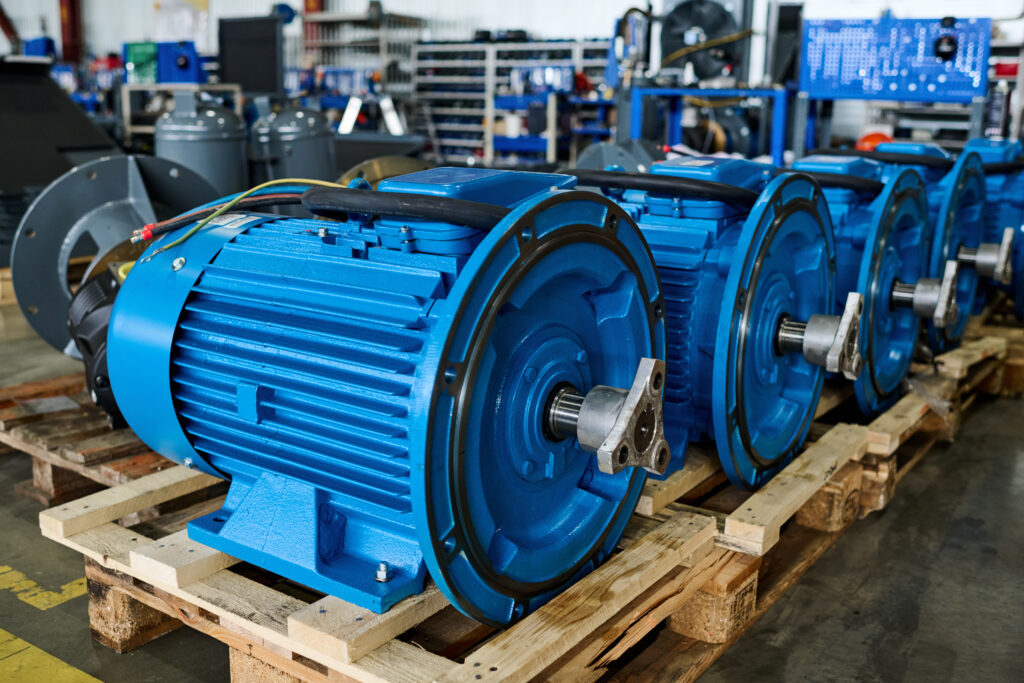
MV Power Drive supplies multiple motor configurations for conveyor use:
- Three phase induction motors
- Motors with brake for inclined conveyors
- Explosion-proof motors (on demand)
- Integrated VFD motors (on demand)
- Permanent magnet and synchronous motors
Each motor type supports specific conveyor requirements.
Match Motor with Gear Reducer
Conveyors demand torque, not raw speed.
Best gear reducers for conveyors
- Helical gear reducers
- Helical bevel gear reducers
- Worm gear reducers for compact systems
Correct motor and gearbox pairing ensures smooth torque transmission and longer service life.
Consider Mounting and Space
Available mounting options:
- Foot mounting
- Flange mounting
- Foot and flange mounting
Compact installations benefit from flange-mounted gear motors.
Environmental and Duty Conditions
Industrial environments require durable motors.
Key considerations
- Dust and moisture exposure
- High ambient temperature
- Continuous duty cycles
Select motors with suitable enclosure ratings and robust body materials such as aluminum or cast iron.
Energy Efficiency and Cost Control
Motors run for long hours. Efficient motors:
- Reduce power consumption
- Minimize heat generation
- Improve reliability
VFD-based speed control further reduces energy waste.
Safety Considerations
Critical safety features include:
- Thermal protection
- Overload protection
- Emergency stop compatibility
- Brake motors for inclined conveyors
Explosion-proof motors apply in hazardous areas.
Common Selection Mistakes
- Ignoring starting torque
- Undersizing motor power
- Skipping gear reducer matching
- Overlooking operating conditions
Avoid these to ensure long-term reliability.
Motor Selection Checklist
Confirm before purchase:
- Conveyor type and load
- Required torque and speed
- Power supply availability
- Mounting space
- Operating environment
- Gear reducer compatibility
Conclusion
Selecting the right electric motor for conveyor systems improves efficiency, reliability, and operating life. Understanding load, speed, torque, and environment leads to better decisions and lower maintenance costs.
MV Power Drive delivers complete industrial drive solutions, including electric motors, gear reducers, chains, sprockets, and power transmission components. Our solutions support automation, material handling, and heavy industrial applications with dependable performance.