
Industrial automation depends on reliable electric motors. Motor choice directly impacts efficiency, torque stability, speed accuracy, energy consumption, and system life. Two motor types dominate automation systems: induction motors and synchronous motors. Each serves a specific purpose and performs best under defined operating conditions.
This guide explains the difference between induction motors and synchronous motors, their benefits, limitations, and how to select the right option for automation applications.
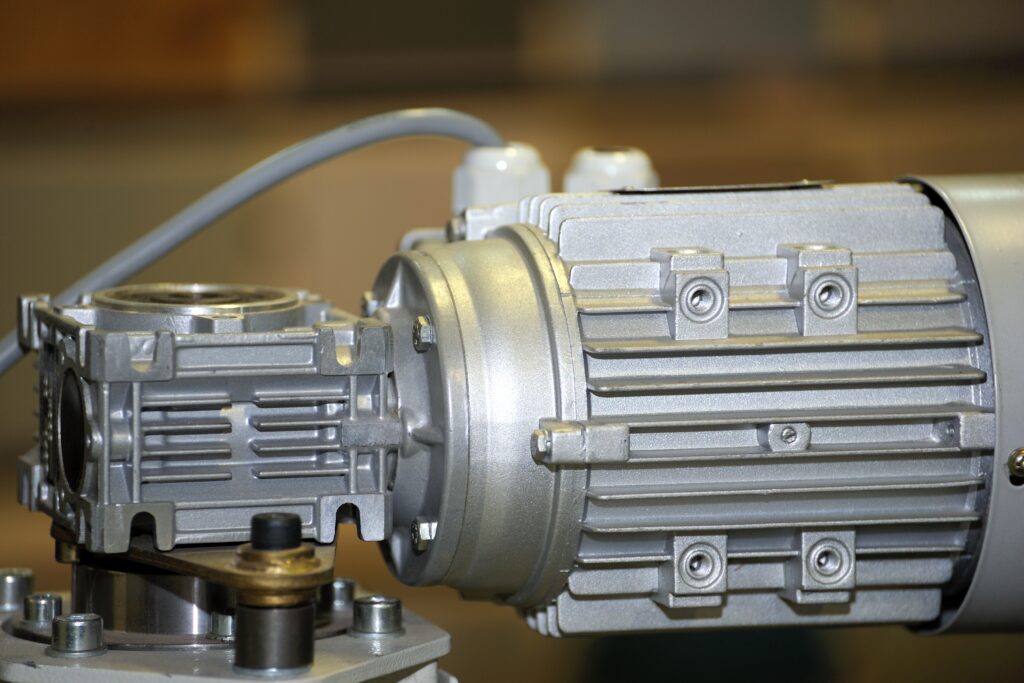
What Is an Induction Motor?
An induction motor, also known as an asynchronous motor, operates when electrical current induces a magnetic field in the rotor. The rotor never reaches exact synchronous speed. Slip always exists between rotor speed and stator magnetic field.
Induction motors dominate industrial automation because of their simple design, durability, and low cost.
Key Characteristics
- Rotor speed slightly lower than supply frequency
- Simple construction
- No external excitation required
- Highly robust for continuous duty
What Is a Synchronous Motor?
A synchronous motor runs at constant speed equal to the supply frequency. The rotor locks with the rotating magnetic field, resulting in zero slip. These motors use permanent magnets or field excitation to maintain synchronization.
Synchronous motors suit automation systems that demand precise speed control and high efficiency.
Key Characteristics
- Constant speed under load
- Zero slip operation
- Higher efficiency
- Precise motion control
Speed Control Comparison
Speed accuracy matters in automation.
Induction Motor
- Speed varies slightly with load
- Requires VFD for accurate speed control
- Acceptable for conveyors, pumps, fans
Synchronous Motor
- Maintains constant speed regardless of load
- Ideal for precision automation
- Best for robotics, indexing systems, and synchronized lines
Torque Performance
Torque determines load-handling capability.
Induction Motor
- High starting torque
- Excellent for heavy loads
- Suitable for gear motors and reducers
Synchronous Motor
- Smooth torque delivery
- Lower starting torque without control systems
- Performs best in controlled environments
Energy Efficiency
Energy cost impacts long-term operation.
Induction Motor
- Slightly lower efficiency
- Higher losses due to rotor slip
- Cost-effective for general use
Synchronous Motor
- Higher efficiency
- Reduced power loss
- Ideal for long-running automation lines
Maintenance and Reliability
Automation demands minimum downtime.
Induction Motor
- Very low maintenance
- No brushes or excitation system
- Excellent for harsh environments
Synchronous Motor
- Requires more precise control
- Permanent magnet types reduce maintenance
- Best for clean, controlled environments
Control System Compatibility
Modern automation relies on advanced control.
Induction Motor
- Easily integrates with VFDs
- Flexible speed and torque adjustment
- Widely supported by industrial controllers
Synchronous Motor
- Requires accurate control systems
- Works best with integrated drives
- Offers superior precision
Cost Comparison
Budget often influences selection.
Induction Motor
- Lower initial cost
- Economical spare parts
- Ideal for large-scale deployment
Synchronous Motor
- Higher upfront cost
- Lower operating cost over time
- Suitable for performance-critical systems
Industrial Applications Comparison
Induction Motor Applications
- Conveyor systems
- Packaging machines
- Pumps and fans
- Mixers and agitators
- General industrial automation
Synchronous Motor Applications
- Robotics
- Precision assembly lines
- Printing machines
- Indexing tables
- Automation requiring exact speed control
Which Motor Should You Choose?
Choose based on application needs, not brand or trend.
Select an Induction Motor if
- Load varies frequently
- Environment is harsh
- Cost efficiency matters
- Continuous heavy-duty operation required
Select a Synchronous Motor if
- Speed accuracy is critical
- Energy efficiency is a priority
- Load conditions remain stable
- Precision automation is required
Role of Gear Reducers in Automation Motors
Both motor types perform best when paired with the right gear reducer.
- Helical gear reducers improve efficiency
- Helical bevel reducers handle directional torque
- Worm gear reducers suit compact installations
Correct motor and gearbox pairing ensures smooth operation, reduced wear, and longer system life.
Common Selection Mistakes
- Choosing based only on motor price
- Ignoring torque and load requirements
- Skipping efficiency analysis
- Not considering control system compatibility
Avoiding these mistakes saves cost and downtime.
Conclusion
Induction motors and synchronous motors both play a vital role in industrial automation. Induction motors deliver durability, simplicity, and cost efficiency. Synchronous motors provide precision, efficiency, and speed stability. The right choice depends on load behavior, control requirements, operating environment, and energy goals.
MV Power Drive supplies industrial motors, gear reducers, chains, sprockets, and power transmission solutions designed for automation, conveyors, and heavy-duty applications. Our focus remains on reliability, efficiency, and long-term performance.